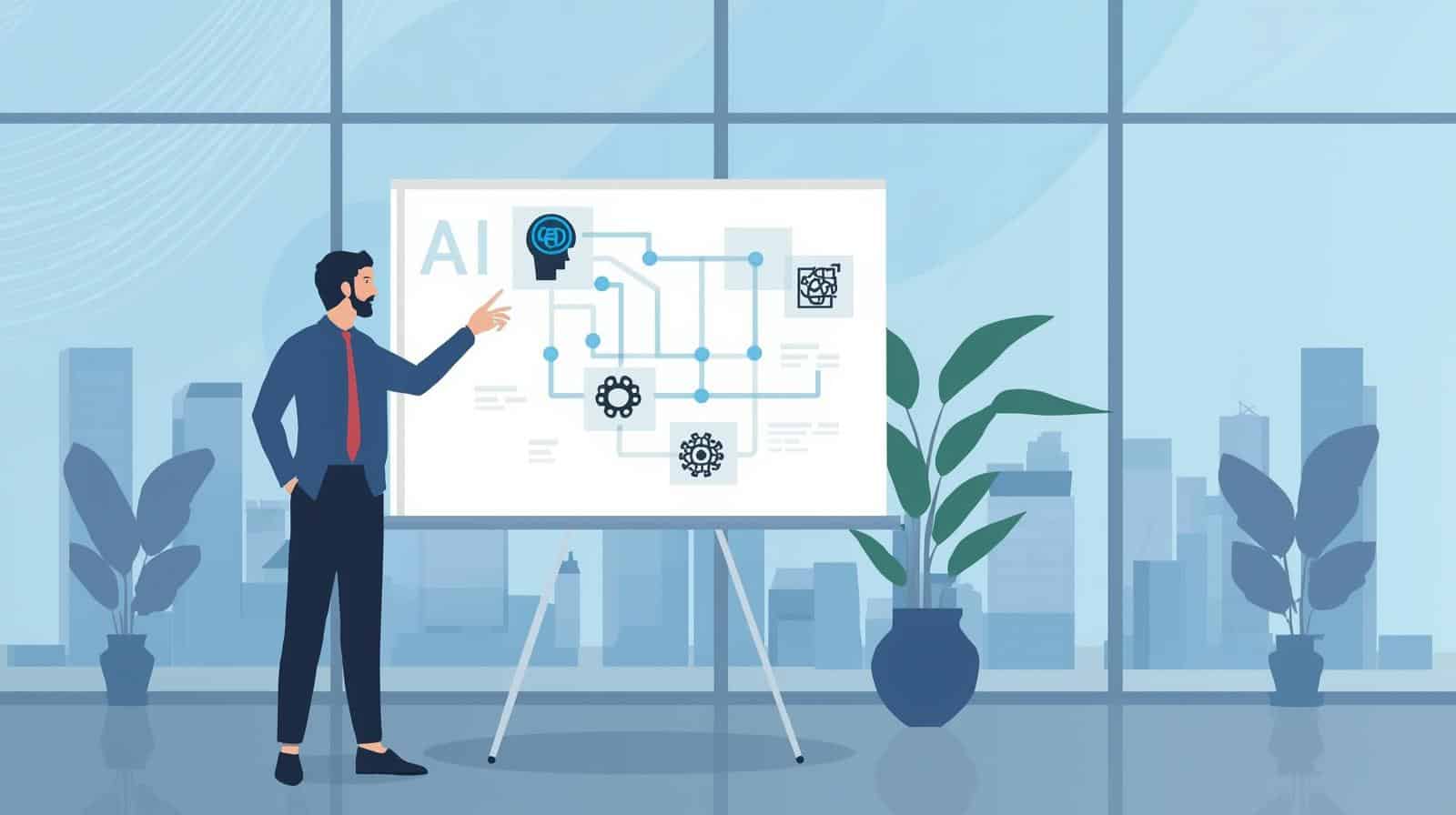




Hiring used to mean job postings, interviews, and onboarding. Today, it can mean something very different. More and more enterprises are turning to AI agents—digital teammates that book meetings, resolve support tickets, manage compliance, and keep working long after your human team logs off.
This isn’t a trend—it’s the next stage in how companies build and scale their workforces. Let’s explore why your next hire might not be human at all.
What Makes AI Agents Different from Traditional Automation
Automation isn’t new. You’ve probably used it to send an email reminder, move a file, or update a CRM record. Helpful, sure—but limited.
AI agents take things further. They don’t just execute a single task; they manage entire workflows. An agent can engage with a customer, capture details, qualify the lead, log it in Salesforce, and schedule a meeting—all in one seamless flow.
They’re not just scripts; they’re teammates who adapt to your workflows, learn over time, and escalate to humans when needed.
Why Enterprises Are Turning to AI Agents
For large organizations, the value is obvious:
-
Cost savings: Agents work 24/7 without salaries, benefits, or overhead.
-
Scalability: Deploy one agent or a hundred, across any department.
-
Speed: Get ROI in under 90 days instead of waiting months for a new hire to ramp up.
-
Compliance-ready: Agents trained for healthcare, finance, government, and other regulated industries.
Instead of hiring more headcount, companies are hiring digital teammates through the NextGen AI Workforce Platform, which provides a central hub to hire, train, and oversee AI agents.
Real-World Roles for AI Agents
The phrase “AI agent” can sound abstract, but their work is very real. Here are just a few examples:
-
Sales: Following up on leads, recovering abandoned carts, booking demos.
-
Support: Resolving tickets instantly and escalating the tricky ones.
-
Finance: Processing invoices, running compliance checks, managing audits.
-
Healthcare: Scheduling patients, triaging claims, assisting with secure communication.
-
Marketing & Growth: Researching audiences, drafting content, scheduling posts.
Instead of adding entire teams for these functions, enterprises are building agentic workforces—AI-powered departments working alongside their human employees.
Oversight Built In
Of course, every leader asks the same question: how do we stay in control? That’s where the NextGen platform is different.
Every agent is monitored through audit-ready logs, dashboards, and role-based permissions. At the top sits Prime, the CEO-level agent that manages other agents—tracking performance, allocating work, and ensuring compliance standards are always met.
It’s like having a control tower for your AI workforce.
The Human + AI Workforce
This isn’t about replacing people—it’s about rethinking how work gets done. Agents take on repetitive, time-sensitive, or compliance-heavy tasks. Humans focus on judgment, creativity, and strategy.
Together, they create a blended workforce where productivity soars, costs fall, and no opportunity slips through the cracks.
That’s why enterprises in industries as different as finance, retail, healthcare, and logistics are already deploying agents—and why more are exploring it every day.
The Bottom Line
Hiring no longer just means people. With the NextGen AI Workforce Platform, your next hire could be an AI agent ready to start tomorrow. They work around the clock, adapt to your workflows, and scale faster than any traditional team.
The future of work isn’t about replacing humans—it’s about building teams where humans and AI work side by side.
And for many companies, that future is already here.